
Pilates Instructor Certification: Choosing the Right Path in 2026
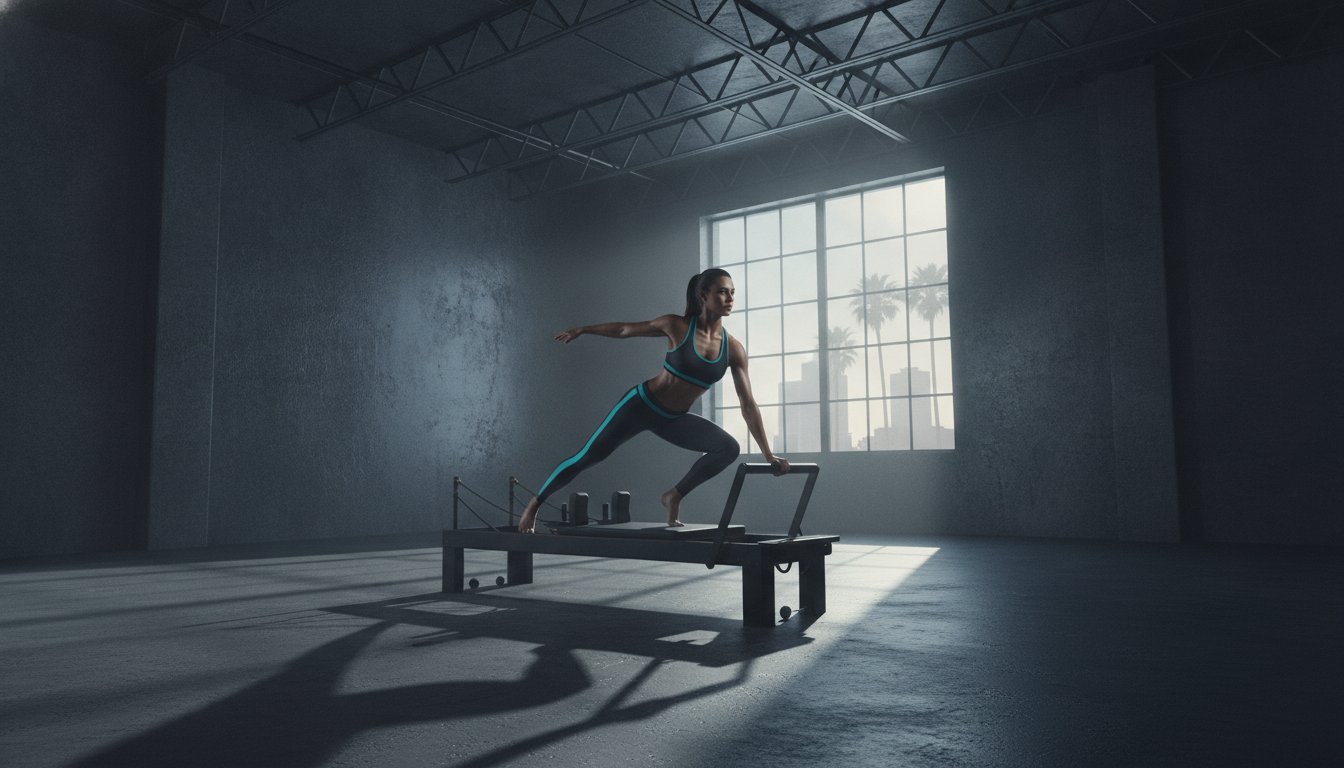
Why waste 500 hours and thousands of dollars on mat-based modules you'll never use in a professional studio? Most aspiring instructors get trapped in bloated, generalist programs that prioritize tradition over performance. You've likely felt the frustration of looking at expensive curriculum lists that don't align with your goals in the high-stakes Los Angeles market. You want to lead high-intensity sessions, not manage floor mats. It's time to stop overpaying for irrelevant accreditation.
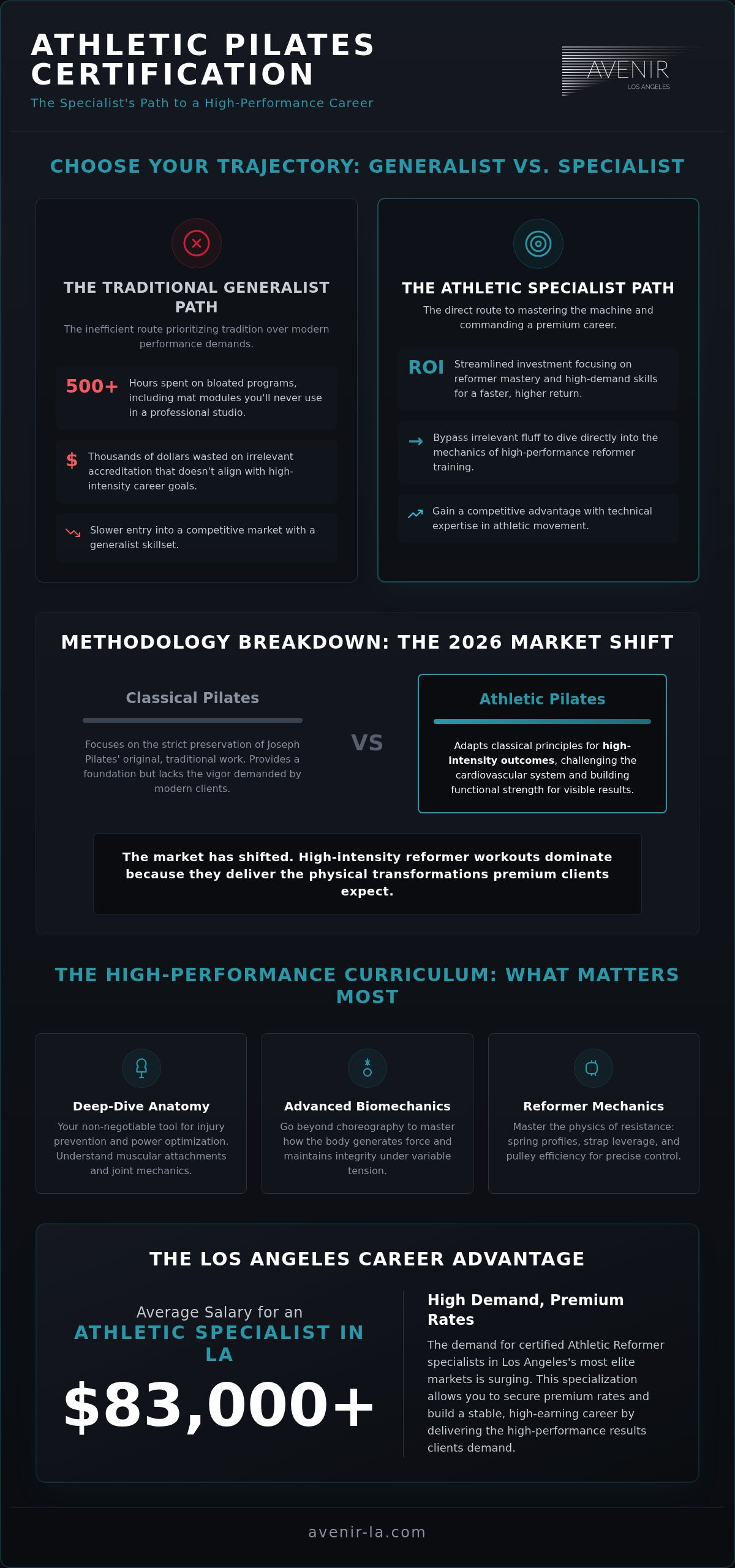
This guide simplifies your journey toward a professional pilates instructor certification by focusing on what actually drives results: athletic reformer specialization. You'll discover how to bypass the fluff, master the mechanics of the machine, and position yourself for a career where the average salary in LA can reach over $83,000. We're detailing the most efficient path to becoming a specialist, the truth about accreditation requirements in 2026, and why technical expertise in athletic movement is your ultimate competitive advantage.
Key Takeaways
- Identify the strategic differences between classical and athletic methodologies to select a path that meets modern studio demands.
- Prioritize a pilates instructor certification that focuses on mechanical reformer mastery and advanced biomechanics for superior results.
- Compare the ROI of specialist tracks against traditional 450-hour programs to streamline your entry into the professional fitness industry.
- Leverage the high demand for athletic specialists in Los Angeles to secure premium rates in the city's most elite markets.
- Master the structural integrity of movement through an anatomy-intensive curriculum designed specifically for high-performance reformer training.
Navigating Pilates Instructor Certification: Classical vs. Athletic Paths
A professional pilates instructor certification is the essential benchmark for safety and movement expertise. It transforms a passion for fitness into a career founded on structural integrity. In 2026, the market has moved beyond the "one size fits all" approach. You face a choice between preserving tradition or driving performance. This decision defines your career trajectory and your ability to command premium rates.
Classical methods focus on the strict preservation of Joseph Pilates' original work. While the History of Pilates provides a strong foundation, the modern market demands more vigor. Athletic methodologies adapt these principles for high-intensity outcomes. Modern clients in cities like Los Angeles aren't looking for a slow-paced session; they want a workout that challenges their cardiovascular system and builds functional strength. The 2026 market is shifting rapidly toward these high-intensity reformer workouts because they deliver visible, physical results.
Many students believe they must master mat modules before touching a machine. This is a common misconception that wastes time and capital. If your goal is to teach in a reformer-based studio, spending months on mat-only modules is inefficient. Specialist tracks allow you to dive directly into the mechanics of the reformer. This is where the highest demand and earning potential reside.
The Evolution of the Reformer Specialist
Modern studios in urban fitness hubs prioritize instructors who master the machine over generalists. A specialist understands the tension, timing, and structural demands of the reformer better than someone spread across five different apparatuses. Athletic Pilates is a results-oriented, discipline-focused movement system. This niche dominates the 2026 landscape because it delivers the physical transformations clients expect from a premium service. Studios now look for instructors who can lead a high-energy room with technical precision.
Accreditation Standards to Look For
The National Pilates Certification Program (NPCP) remains a recognized industry benchmark, but it isn't the only path. Studio-specific certifications often lead to immediate job placement because they train you in a specific, successful methodology. Look for a curriculum that prioritizes deep-dive anatomy. Without expert-level mechanical knowledge, you cannot safely push a client to their peak performance. Ensure your pilates instructor certification focuses on biomechanics to prevent injury and maximize power output.
The Core Curriculum: Anatomy, Biomechanics, and Reformer Mastery
High-performance instruction requires more than a list of exercises. An elite pilates instructor certification must prioritize the science of movement over traditional choreography. You need to understand exactly how the body generates force and maintains structural integrity under variable tension. Deep-dive anatomy is non-negotiable. It is your primary tool for injury prevention and power optimization. Without a granular understanding of muscular attachments and joint mechanics, you cannot safely push an athlete to their physical limit.
Mastery of the reformer means mastering the physics of resistance. You must analyze the specific tension profiles of springs, the leverage of straps, and the mechanical efficiency of pulleys. Unlike free weights, reformer resistance provides a unique "time under tension" that requires precise control. Elite programs move beyond simple memorization. They teach Athletic Programming, a system-based approach where you design sessions based on physiological goals. You learn to manipulate variables like tempo and load to drive specific physical adaptations.
Mastering the Machine: Beyond the Basics
Professionalism starts with equipment safety and maintenance. You are responsible for the mechanical integrity of the reformer during every high-intensity session. This includes regular checks of spring health, rope wear, and carriage alignment. Understanding force production is critical for guiding clients through complex, multi-planar movements. For a deeper look at the physics involved in these sessions, explore Athletic Reformer Pilates: The Science of High-Performance Movement. This mechanical expertise ensures your clients move with maximum efficiency and zero wasted effort.
Progressive Programming for Athletes
Shift your focus from a "rehab" mindset to a "performance" mindset. Modern certification includes the strategic use of plyometrics and the jumpboard to build explosive power and neurological stability. You will learn to design classes that challenge coordination, strength, and cardiovascular endurance simultaneously. This disciplined approach ensures every session delivers a measurable physical edge. You aren't just leading a class; you are coaching a high-performance system. If you are ready to master these advanced techniques, consider enrolling in a professional reformer teacher training program to launch your career.
Evaluating Program Formats: Comprehensive vs. Specialist Tracks
Choosing a pilates instructor certification requires a cold analysis of your career goals. Most traditional programs push a 450-hour comprehensive model. This includes the Cadillac, Chair, and Ladder Barrel. If your goal is to dominate the athletic reformer market, these extra modules are often a distraction. They increase your tuition and delay your start date. Efficiency is the new standard in professional training.
The most common objection involves the necessity of mat certification. In the 2026 market, the answer is clear. You don't need it. High-end studios focus on reformer performance because that's where the client demand lives. Spending months on floor-based modules you won't teach is a strategic error. Focus your capital and your energy where the revenue is highest. Specialist tracks allow you to master the machine and enter the workforce months ahead of your peers.
Hybrid models offer the best balance for modern professionals. These programs combine online theory with in-studio practical hours. You can master anatomy and biomechanics on your own schedule. This leaves your studio time dedicated to what matters: moving the carriage and coaching athletes. It's the fastest path to professional competency without sacrificing the depth of your education.
The Problem with Generalist Training
Learning every piece of equipment dilutes your skill set. You end up a "jack of all trades" who lacks deep mechanical mastery. For an instructor focused on athletic performance, the Cadillac or Ladder Barrel can be a significant distraction from the reformer. The "Generalist Trap" is the inefficient pursuit of multiple certifications that dilutes technical mastery and delays professional ROI. Specialization allows you to become the elite authority on the machine that actually fills class rosters.
The Value of Hands-On Mentorship
Online-only training cannot replace the rigors of a studio floor. You need in-person apprentice hours to develop your coaching voice and tactile cueing. A Master Trainer provides the feedback necessary to refine your athletic reformer approach. They bridge the gap between theory and high-stakes performance. For a detailed breakdown of local options, see Pilates Teacher Training Near Me: The 2026 Guide to LA Certifications. This hands-on experience remains the gold standard for modern instructors. Don't settle for a certificate that lacks practical rigor.
The 2026 Career Outlook for Certified Instructors in Los Angeles
Los Angeles remains the global epicenter for boutique fitness. In high-demand neighborhoods like Silver Lake, Hollywood, and Burbank, the appetite for high-performance instruction has never been sharper. A specialized pilates instructor certification is no longer just a credential; it's a ticket into an elite economy. As of August 2026, the average salary for a Pilates instructor in Los Angeles has reached $83,462. Top-tier specialists in premium markets often command $60 to $90 per group class. Private session rates are even higher, reflecting the value of expert-level mechanical knowledge and personalized programming.
Modern instructors in LA operate as tastemakers. Your certification serves as the foundation for a brand that blends technical expertise with a high-performance aesthetic. Success in this market requires a disciplined social media presence that highlights structural integrity and athletic results. You aren't just teaching a class. You're curating a lifestyle of refined movement. This brand identity is what attracts loyal clients who value efficiency over generic wellness clichés. By positioning yourself as an authority in athletic movement, you build a reputation that transcends the studio floor.
Winning the LA Studio Market
Boutique studio owners in Los Angeles have a specific profile in mind during auditions. They look for athletic vigor and professional poise. The "zen" approach is losing ground to results-oriented, high-intensity programming in high-end neighborhoods. You must demonstrate a command of the room and a deep understanding of biomechanics. Professional networking within the LA Pilates community is equally vital. Building relationships with studio founders in West Hollywood or Santa Monica can accelerate your career faster than any job board. Show up with a disciplined technique and a clear, authoritative coaching voice.
Diversifying Your Income
A career in Pilates is most lucrative when you diversify your revenue streams. Combine high-energy group classes with lucrative private training sessions and exclusive luxury retreats. Your pilates instructor certification acts as the baseline for launching specialized workshops that target specific athletic goals. This multi-channel approach maximizes your earning potential while keeping your practice dynamic. For a complete roadmap on entering this profession, read our How to Become a Pilates Instructor: 2026 Definitive Guide. If you're ready to secure your place in the LA market, explore our professional teacher training programs to begin your transition.
Launching Your Career with Avenir Athletic Pilates Teacher Training
Avenir Athletic Pilates provides a professional teacher training program for those who demand excellence. We have stripped away traditional filler to focus exclusively on the machine that defines the modern fitness market. This is the premier pilates instructor certification for those who want to lead high-intensity, results-driven sessions. Our curriculum is built on movement science and structural integrity. We don't teach mat Pilates. We don't teach yoga. We teach you how to master the reformer to drive elite physical performance. This focus ensures your education is deep; your skills will be sharp and market-ready.
Choosing a specialist path means you value your time and your career ROI. Most programs waste hundreds of hours on apparatuses that rarely see use in a modern boutique studio. Avenir respects your ambition by providing a streamlined, high-performance curriculum. You will master the mechanics of the reformer, the nuances of athletic programming, and the art of professional coaching. This is about more than just a certificate. It is about becoming a leader in a fast-paced fitness environment where precision is the only standard that matters.
The Avenir Advantage: Specialist Rigor
Our training occurs in a disciplined, high-end environment that mirrors the expectations of the Los Angeles market. You gain direct access to a methodology that prioritizes athletic vigor and mechanical precision. Avenir graduates don't just "teach"; they coach with authority. You will leave this program ready to step into a high-performance studio and command the room from day one. This level of specialization ensures you aren't just another generalist in a crowded field. You become a specialist in the most lucrative sector of the industry.
How to Apply for the Next Cohort
The path to a professional pilates instructor certification with Avenir is selective. We look for candidates who are ready to commit to a high standard of movement and professional conduct. Follow these steps to begin your transition:
- Step 1: Research the Avenir Athletic methodology. Review our core principles and results-oriented approach to ensure they align with your career goals.
- Step 2: Attend a session. You must experience the athletic reformer intensity firsthand at our Los Angeles studio before applying.
- Step 3: Submit your application. We prioritize applicants who demonstrate dedication, discipline, and a strong foundation in physical literacy.
- Step 4: Complete the curriculum. This involves a rigorous combination of in-studio practical hours and advanced theoretical study focused on biomechanics.
Your career as an elite instructor starts with a decision to specialize. Don't settle for a generalist education that slows your progress. Join a cohort that values performance, efficiency, and professional urgency.
Master Your Future in Athletic Movement
The 2026 fitness landscape rewards the specialist. Generalist programs that dilute your focus across outdated apparatuses are a strategic mistake. To command premium rates in Los Angeles, you must master the machine that drives the most significant physical change. Choosing a pilates instructor certification that prioritizes athletic reformer methodology ensures you enter the workforce with technical authority and a competitive edge. You now understand how biomechanics and progressive programming define the modern tastemaker. It's time to execute on that knowledge.
Avenir Athletic Pilates offers an elite, Los Angeles-based training environment designed for those who value efficiency and structural integrity. Our no-fluff curriculum focuses strictly on the athletic reformer. We skip the mat and yoga modules to ensure you become an expert in high-performance movement science. This disciplined approach prepares you for the rigors of the city's most prestigious studios. You'll graduate ready to lead with vigor and precision.
Take the final step toward a high-performance career. Apply for Avenir Athletic Pilates Teacher Training today. We're ready to help you build a career that matches your ambition.
Frequently Asked Questions
How long does it take to get a Pilates instructor certification in 2026?
The timeline for a professional pilates instructor certification depends on your chosen track. A comprehensive program typically requires 450 to 500 hours of study and practice. Specialist reformer tracks allow for a more streamlined path; they often complete in significantly less time by focusing strictly on the machine. You'll balance theoretical anatomy study with in-studio apprentice hours. Expect to dedicate several months to reach full professional competency and meet industry standards.
Do I need to be certified in mat Pilates before taking a reformer course?
You don't need a mat certification to master the reformer. Many traditional programs mandate mat modules, but modern specialist tracks bypass this requirement to prioritize machine mechanics. Boutique studios in 2026 value reformer expertise because it aligns with high client demand. Focusing strictly on the reformer saves you time and capital while preparing you for the most lucrative teaching opportunities in the high-performance fitness market.
What is the average salary for a Pilates instructor in Los Angeles?
The average annual salary for a Pilates instructor in Los Angeles is approximately $83,462 as of August 2026. Compensation ranges from entry-level positions to high-earning specialist roles reaching nearly $150,000. Top-tier instructors in neighborhoods like Hollywood or Silver Lake often command hourly rates between $60 and $90 for group sessions. Your earning potential increases significantly as you build a reputation for technical precision and athletic results in premium studios.
Is an online Pilates certification sufficient for hiring in top studios?
Online theory provides a foundation, but it isn't sufficient for hiring at elite studios. Professional owners look for instructors with verifiable in-person apprentice hours. You must demonstrate tactile cueing, equipment safety, and high-energy room management that online-only programs can't simulate. A hybrid model is the modern standard. It combines digital anatomy modules with rigorous, hands-on studio training to ensure you can handle the mechanical demands of high-intensity sessions.
What is the difference between comprehensive and specialist Pilates training?
Comprehensive training covers every apparatus, including the Cadillac, Chair, and Ladder Barrel. Specialist tracks focus exclusively on a single platform like the athletic reformer. While comprehensive programs offer breadth, specialist training provides deeper mechanical mastery and faster market entry. In 2026, many professionals choose the specialist path to become elite authorities in high-demand reformer studios rather than generalists across equipment they may never actually use in a professional setting.
Are Avenir Athletic Pilates certifications recognized for CECs?
Avenir’s teacher training focuses on providing a high-performance pilates instructor certification that meets elite industry standards. Our curriculum is designed to align with professional benchmarks for anatomy and biomechanics. Graduates gain the technical rigor required by top boutique studios. Always verify with your primary accreditation body to confirm how specialist modules apply toward your specific renewal requirements. We prioritize technical mastery and mechanical expertise that translates directly to studio success.
Can I teach private sessions immediately after getting certified?
You can begin teaching private sessions once you complete your required practical hours and pass your final evaluation. Most certifications include a mentorship phase where you lead one-on-one sessions under supervision. This transition period builds the technical confidence needed to manage complex client injuries or athletic goals. Private training is often the most profitable part of an instructor's schedule. Mastering these personalized programming skills during your training is essential for high earning potential.
What makes athletic reformer Pilates different from classical Pilates training?
Classical training focuses on the strict preservation of Joseph Pilates' original exercises and specific order. Athletic reformer Pilates prioritizes modern biomechanics, high-intensity intervals, and functional strength adaptations. It moves away from "zen" aesthetics to focus on physical vigor and structural integrity. This methodology is designed for a modern audience seeking measurable performance gains. It utilizes the machine's resistance to challenge the cardiovascular system and build lean, functional power.